

Programme
structure
The students will …
… each study in two of the six consortium partners and thus in two different countries, different from the country of residence of the student at enrolment stage, following a designated track within the joint programme in order to achieve two degrees, one from each of the institutions at which the student studies.
Studies will be …
… conducted full-time with credits designated on a semester-basis in accordance with the degree awarding requirements of each institution involved with (at least) 30 ECTS each and in line with the Lisbon Convention.
The programme covers one academic year, for which successful students will receive 60 ECTS. The academic year (September – August) is divided into 2 semesters. The first semester starts in the beginning of September, and lasts until the 15 January. The second semester lasts from January until the very beginning of September. The thesis deadline depends on the partner university the student spends his/her second semester at. The unique international character of the MIPDaL Programme is secured through an intensive co-operation between six European universities and also Non-European partners.
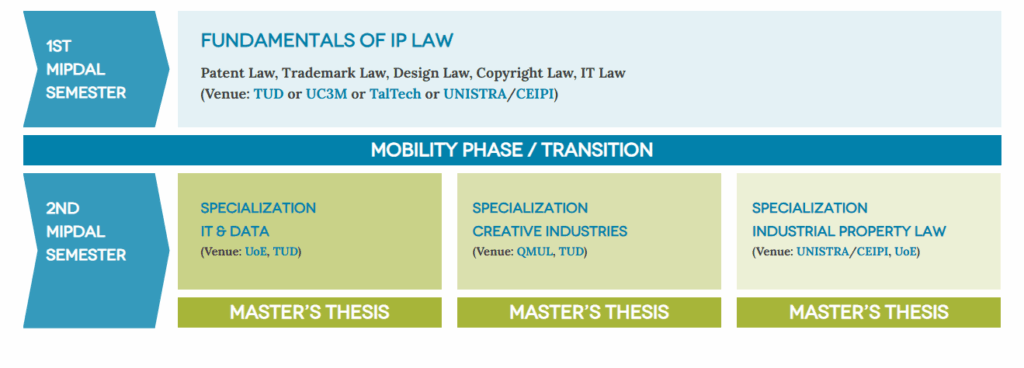
Students study at two different universities. In the first semester students can choose among four teaching universities. In the last term students have the choice of five different locations.
THE MIPDAL Study Program…
… offers a student-centred curriculum built on close interaction between research and teaching.
While the first part of the program provides a shared foundation across all tracks and partner universities in the field of IP law, specialization begins in the second part through dedicated courses tailored to each track and institution.
The first semester courses are introductory courses as well as core courses on the major topics in IP & Data Law. During the first semester it is assured that students from different educational backgrounds will receive the necessary foundation of IP & Data Law, provided by a virtual Introductory session on EU Law, followed by lectures, seminars, workshops and tutorials in modules with regards to Patent Law, Trademark & Design Law, basics of IT & Data Law and Copyright Law in order to continue with more specialised subjects in the second semester, according to the student’s choice and their professional and academic interests in the three disciplines/spezialisation tracks.
Through the combined expertise of its consortium partners, the programme provides both a high-quality multidisciplinary foundation and top-level specialization in one of its three focus areas, therefore students choose for their second semester from three distinct academic tracks.
Track selection takes place during the application process, allowing students to align their studies with their academic interests and career goals. All students must follow the programme’s mobility requirements: they are required to study at two different universities, both of which must be located outside the student’s country of residence at the time of enrollment.
The academic program …
… begins at each partner according to the academic calendar in force and established there, according to annual alterations. The exact study periods are compiled each year in June by the Education Committee in accordance with the partner’s internal specifications and will be published before applications start.
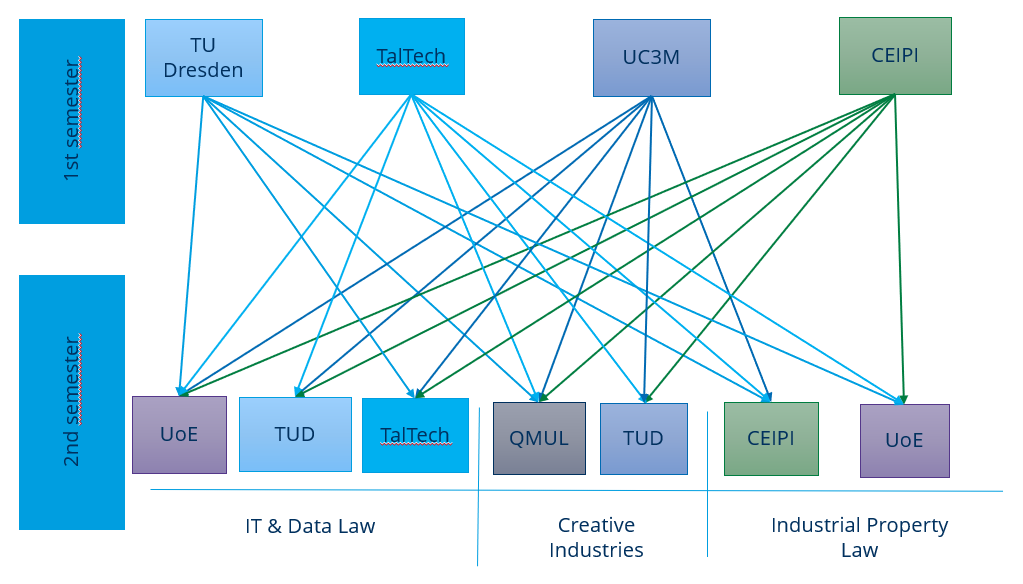
Students can choose to follow one of three different tracks in the MIPDaL programme: the IT & Data Law track, the Creative Industries track and the Industrial Property Law track. While in the first term the basic learning outcomes are the same across all tracks and universities, specialization starts in the second term with specialized courses per track and university partners.
MIPDaL provides a student-centred curriculum, based on a strong interaction between research and education. By the cooperation between the consortium partners, it delivers a top quality and broad multidisciplinary basis as well as a top-level individual specialisation in one of 3 disciplines:
- IT & Data Law,
- Creative Industries
- Industrial Property Law
The specialization tracks are chosen by applicants as to their study interest upon application. All students, however, need to follow the general mobility rules of the programme: to study at two different universities, which have to be different from the country of residence of the student at the time of enrolment.
Students start…
… their first semester (basics in IP & Data Law) at the respective institutes of the following Consortium partners:
• TUD
• TalTech
• UC3M
• UNISTRA/CEIPI
During the second semester …
… modules within the specialisation tracks will be provided by the following partners:
• IT and Data Law: TUD, UoE, TalTech
• Creative Industries: TUD, QMUL
• Industrial Property Law: TUD, UNISTRA/CEIPI, UoE
The teaching partners in the second semester provide a wide range of options for deepening the specialisation.
All MIPDaL students start …
… their studies at the beginning of September with a joint online Induction week in the second week of September. The study programme is designed to end in the first week of September with its last exam or submission of the master’s thesis. Assessment and awarding can take place later as well.
Early
September
Start of the academic programme for all students
Mid-
September
Induction week
September-January
1st mobility phase
Teaching and examination period at 1st MIPDaL partner according to study
End of
January –
June
2nd mobility phase
Teaching and examination period at 2nd MIPDaL partner according to study
End of
June
MIPDaL IP Summer Conference &
Graduation event for last years students
JulY – 1St
week of
September
Master’s thesis
After Master’s Thesis
Graduation
All MIPDaL COURSES …
…at TalTech, TUD, QMUL and UoE are taught in English, while courses at UNISTRA/CEIPI will be taught in French and at UC3M are taught in Spanish. The thesis has to be written in English if not agreed on otherwise.
Please find our language proficiency requirements here.
Students are able to …
… complete an internship or an alternative practice-based course within each track allowing students to comply with this requirement. Students that choose to study at UC3M will have to do an internship mandatorily during their second semester.
NIce to know…
…MIPDaL is a full time programme. As such, we discourage taking a side job, since you have to be available for classes during the week. Class attendance is highly recommended (if not obligatory), except in case of absence for documented medical reasons or other exceptional circumstances.
First semester
In the first semester of the MIPDaL programme, students build the essential foundations for advanced study in the fields of Intellectual Property Law, Data Law, or the Creative Industries. Through a combination of core courses, interdisciplinary perspectives, and research-driven teaching, the programme equips students with a solid understanding of the legal, technological, and creative frameworks that shape today’s digital and innovation-driven landscape.
This shared first-semester curriculum ensures that all students – regardless of their future specialization – develop the knowledge, skills, and analytical tools necessary to excel in their chosen track. Whether students later focus on protecting creative works, navigating data-driven environments, or exploring the dynamics of cultural and creative sectors, the programme prepares them for a seamless and confident transition into their specialization.
Offered modules
Please note that the module information provided pertains to the current academic year and may be subject to change in subsequent years. It is therefore offered for indicative purposes only.
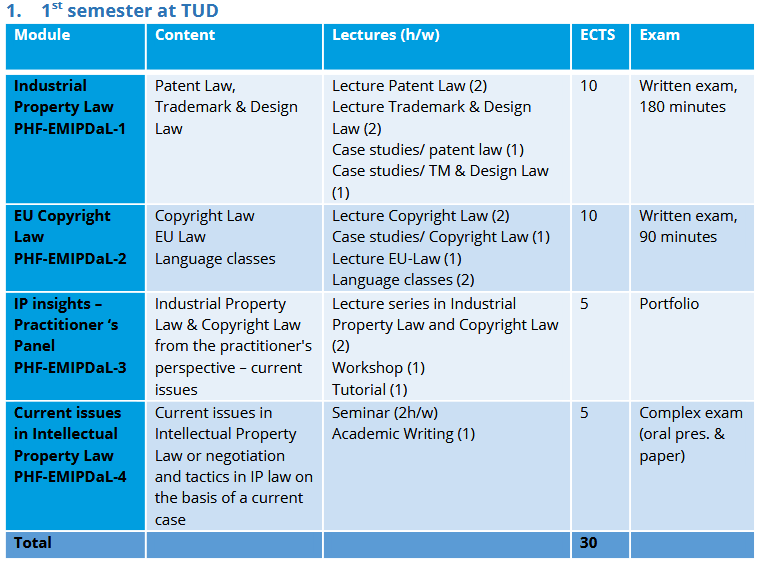
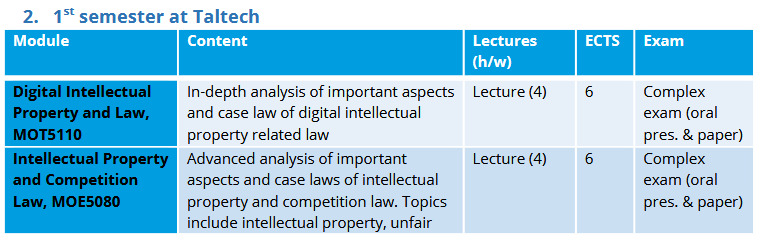
Your first semester serves as an introductory semester. You will learn the legal fundamentals, forming the basis for your specialization in the second semester, depending on your track. The universities of the MIPDaL consortium offer the following modules for the first semester:
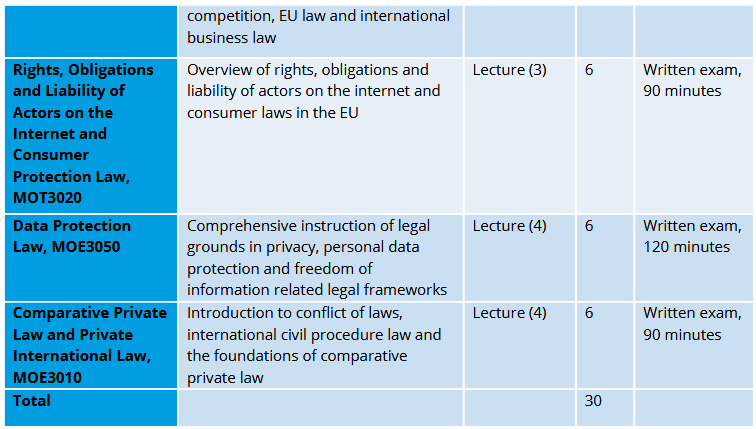
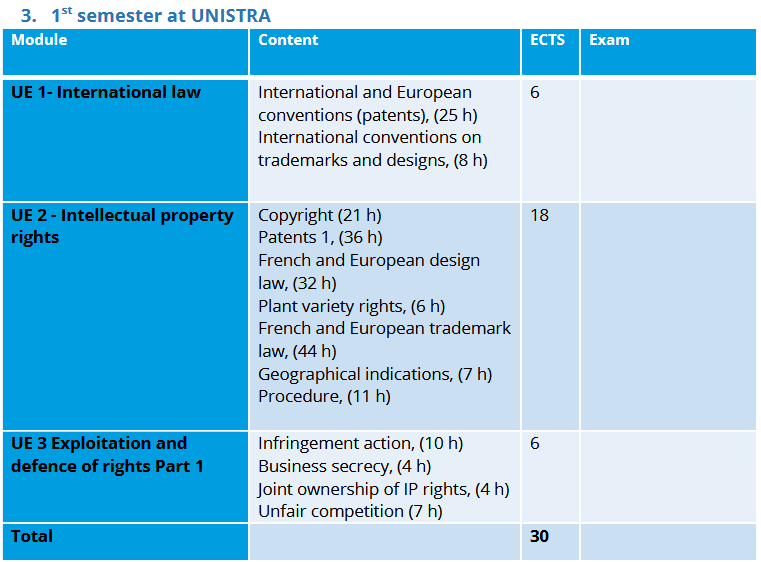
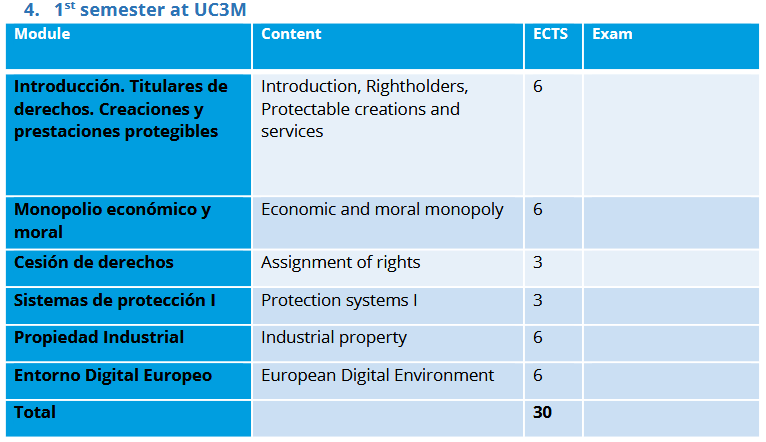
The course content of your second semester strongly depends on your track selection. You can therefore find the modules offered directly under the descriptions of the individual tracks.
Track 1: IT & Data LaW
In today’s digital world, data and technology shape nearly every aspect of business, government and daily life. Understanding the legal frameworks that govern information technologies is therefore essential for future lawyers, policymakers, and professionals in the tech sector. This specialization provides students with a comprehensive introduction to key issues in IT and data law, including data protection, cybersecurity, digital contracts, intellectual property, and the regulation of emerging technologies such as artificial intelligence. By exploring real-world cases and current legal developments, students gain practical insights into how law adapts to rapid technological change.
Studying IT & Data Law for your MIPDaL specialization semester offers an invaluable opportunity to:
- Develop a solid understanding of the legal challenges and opportunities of the digital age.
- Acquire skills that are highly sought after in both the legal and technology sectors.
- Engage critically with the ethical and societal implications of digital innovation.
- Prepare for advanced study or a career at the intersection of law, technology, and policy.
In short, it equips you to become a forward-thinking legal professional ready to navigate and shape the evolving digital landscape.
Research and course highlights:
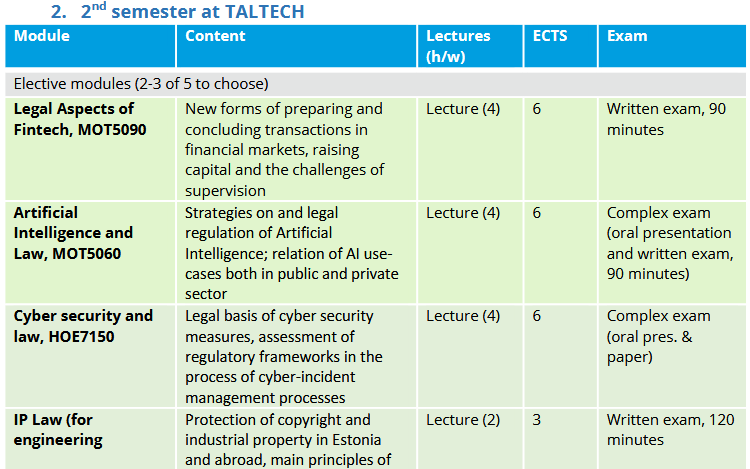
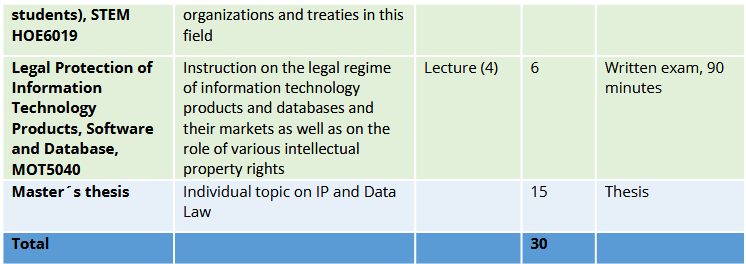
At TalTech dive into a forward-thinking course portfolio on law and technology, featuring IT Law, blockchain-based architectures and smart contracts, fintech instruments as well as the digitalisation of legal professions as well comprehensive courses on GDPR and other aspects of data protection law. Your courses will be often based on case-studies deriving from Estonia’s very liberal approach to data usage, especially personal data (e. g. in tools such as the X-Road and the Estonian State Portal).
At TUD engage with cutting-edge research on data governance and data protection law. Its projects aim to enable innovative and responsible access to data, supporting its re-use in both academic and industrial contexts. A key area of focus is the development of legal models such as data trustees. Another research stream explores the creation of legal frameworks for the responsible deployment of AI. These topics don’t just stay in research papers – they’re brought straight into the classroom, giving you hands-on insight into legal problem-solving.
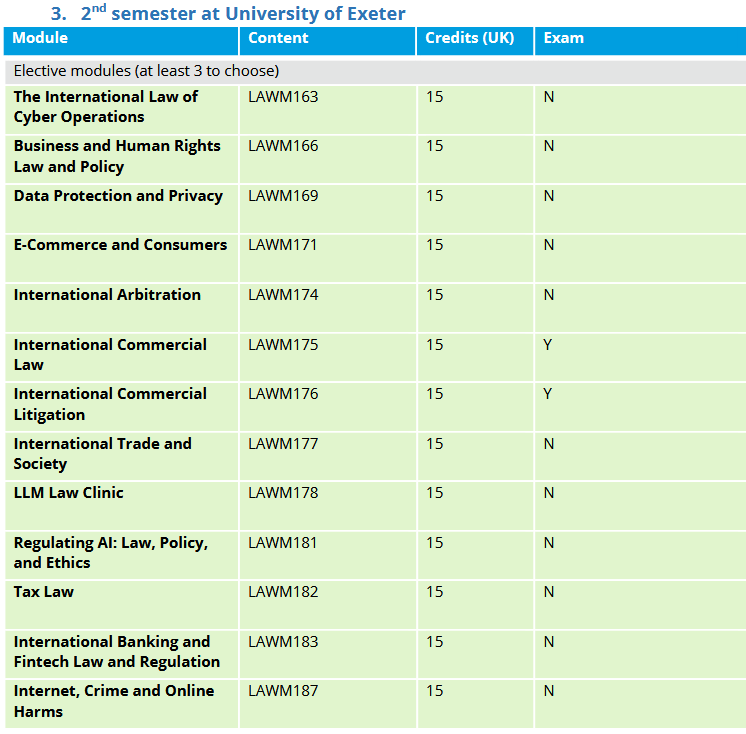
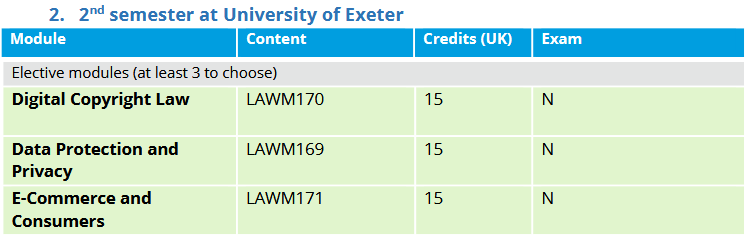
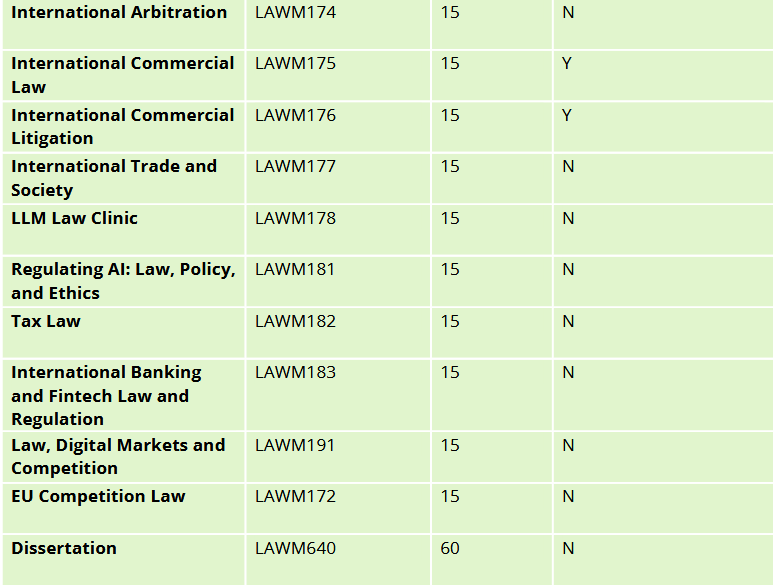
At UoE choose from a rich menu of courses in the field of IT & Data Law such as Data Protection and Privacy, E-Commerce Law, Digital Copyright Law, Regulating AI: Law, Policy, and Ethics and Fintech Law. Whether you’re into tech, policy, or ethics, you’ll find your niche here.
Modules offered
Please note that the module information provided pertains to the current academic year and may be subject to change in subsequent years. It is therefore offered for indicative purposes only.
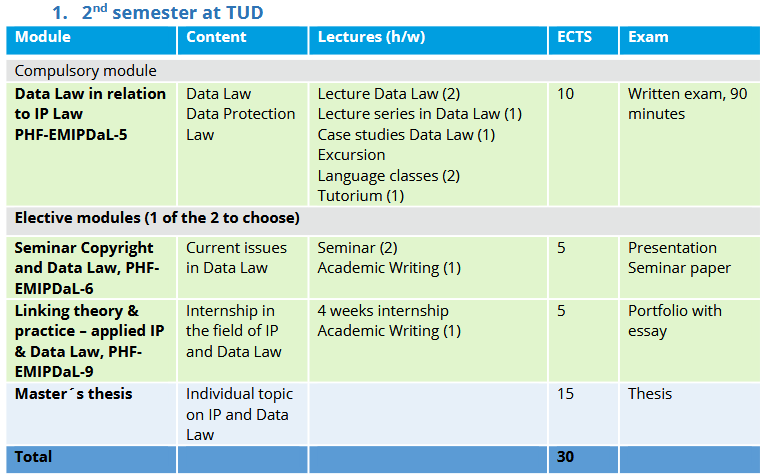

Track 2: IP Law – Protecting innovation and creativity
Innovation drives economic growth and global competitiveness, and the protection of intellectual creations lies at the heart of this process. Industrial Property Law provides an in-depth understanding of how the law safeguards innovation, creativity, and brand identity through patents, trademarks, designs, and related rights.
This specialization introduces students to the key legal principles, international frameworks, and policy considerations underpinning industrial property protection. Through case studies, seminars and comparative perspectives, students explore how intellectual property rights foster innovation while balancing the public interest and access to technology.
Studying Industrial Property Law for your MIPDaL specialization semester offers an invaluable opportunity to:
- Gain a solid foundation in the legal mechanisms that protect technological and commercial innovation.
- Understand the strategic role of intellectual property in business, research, and international trade.
- Analyse real-world disputes and developments in patent, design and trademark law.
- Build expertise that is increasingly valued in legal practice, industry, and policy-making.
Ultimately, this module equips you with the knowledge and analytical skills to navigate and influence the dynamic field of intellectual property in a global context.
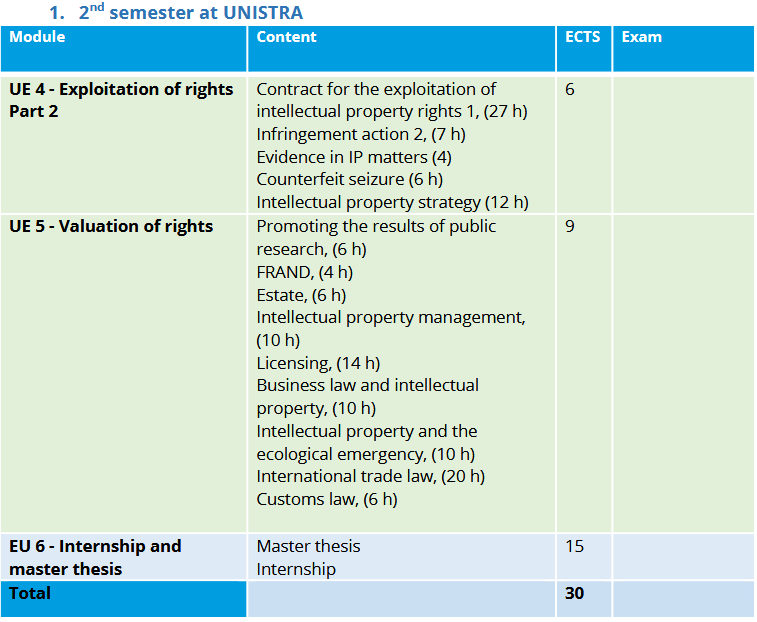
Modules Offered
Please note that the module information provided pertains to the current academic year and may be subject to change in subsequent years. It is therefore offered for indicative purposes only.
Track 3: Creative Industries – Law, culture and the business of creativity
The creative industries – including film, music, art, fashion, publishing, and digital media – play a vital role in shaping contemporary culture and the global economy. Legal protection of creative works is central to ensuring that artists, producers, and innovators can thrive in an increasingly digital and interconnected world.
This specialization explores how Intellectual Property Law supports and regulates the creative industries, balancing the interests of creators, consumers, and society. Students examine copyright and related rights, design law, licensing practices, and the impact of new technologies on creative production and distribution. Through case studies, seminars and comparative approaches, the course highlights how law, culture, and business intersect in creative economies around the world.
Studying IP & Law of Creative Industries for one semester allows you to:
- Understand the role of intellectual property in supporting innovation and cultural expression.
- Analyse legal and commercial challenges faced by creators and creative businesses.
- Explore how digital transformation reshapes copyright, licensing, and access to creative content.
- Develop critical and practical insights relevant to careers in law, media, culture, and the arts.
Ultimately, this specialization equips you with a nuanced understanding of how law interacts with creativity and commerce — preparing you to engage confidently with the complex realities of today’s creative sectors.
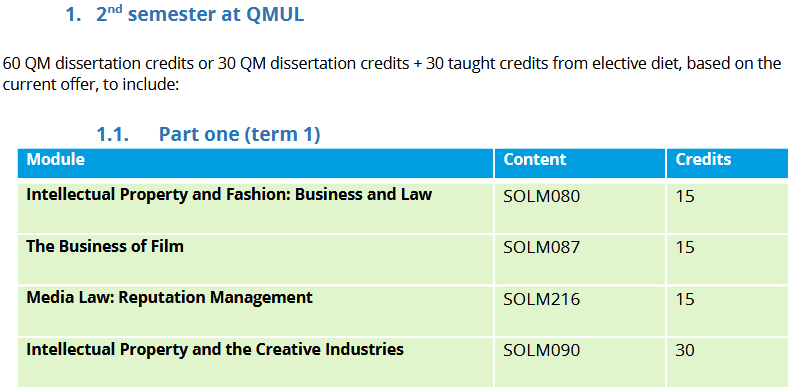
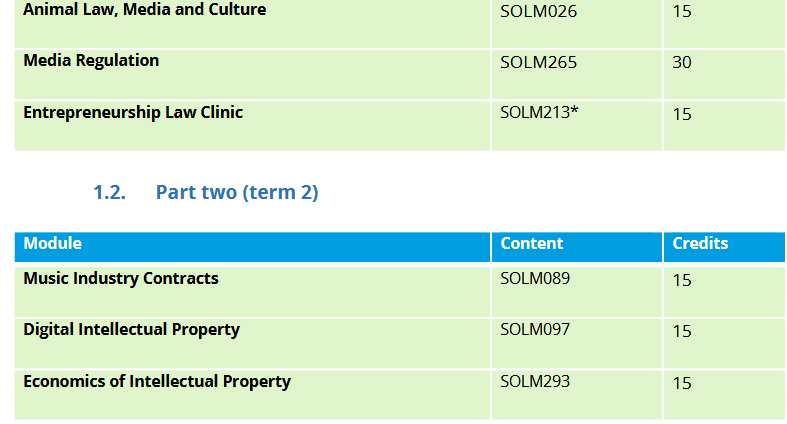
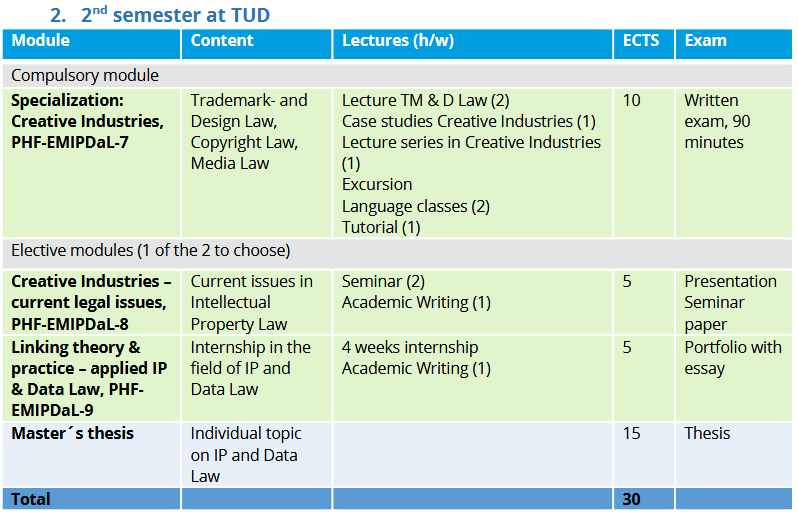
Modules OffereD
Please note that the module information provided pertains to the current academic year and may be subject to change in subsequent years. It is therefore offered for indicative purposes only.
Module Exams
Throughout the program, students are required to complete a variety of assessments across both partner universities to successfully pass each semester. The format and type of these assessments may vary based on the partner university and chosen track.
Depending on the specific partner institution, assessments can be in different forms, including written and oral exams, which may take place on campus or online.
In addition to passing all semester exams, students must complete a master’s thesis to graduate and receive their degree. The thesis is the most substantial assessment within the program, contributing significantly to the final grade.
The Master’s Thesis …
… is written during the second semester of study and is typically the final examination within the programme. In some cases, students connect with their future supervisors as early as the first semester to discuss and agree on a topic.
The top theses of each class are selected and presented at the graduation ceremony.
The thesis must be written in English. Students who complete their second semester at UNISTRA/CEIPI may have the option to write their thesis in French. This is allowed when French is not the student’s mother tongue and both a supervisor and an external examiner are available to evaluate the Master’s thesis in this fashion. Second supervision by the other partner in the particular track is recommended.
Students will carry out their thesis work in the form of an academic paper/dissertation on a specific subject in IP or IT Data Law which will typically be individually supervised, carried out and examined at the institution where the student is enrolled for the second semester.
The partner who hosted the student during the first semester phase may also appoint an examiner to be the second supervisor with the rights to review the thesis and take part in the examination in line with, and subject to, the rules and processes of the second semester institution.
MIPDaL offers excellent teaching by top legal scholars. For this reason, tuition fees are charged. At the same time, the consortium awards up to 12 Erasmus Mundus scholarships per intake.
Please find detailed information on this topic here: Application & Admission – MIPDaL